
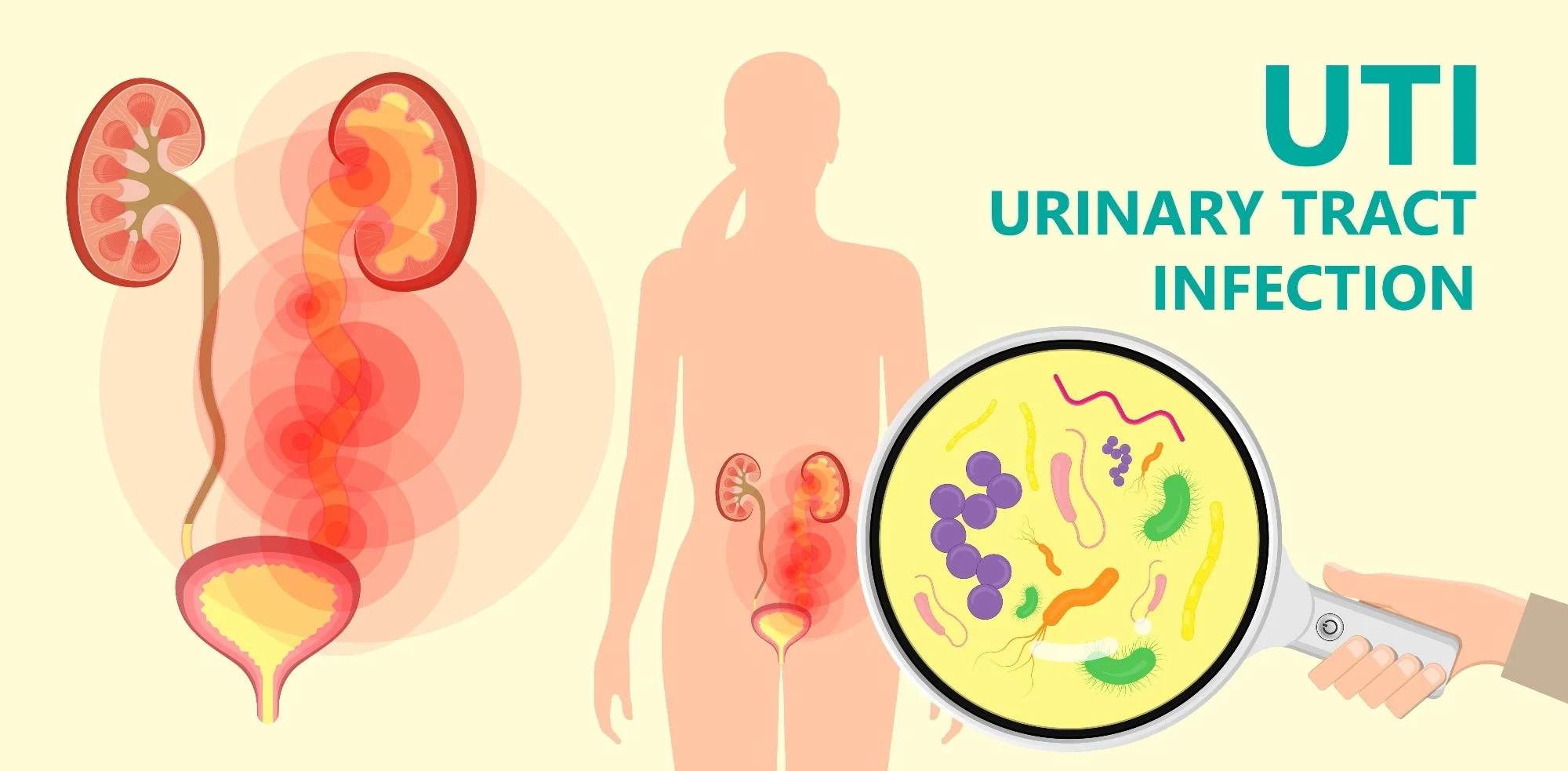
Any infection that affects any region of the urinary system is known as a urinary tract infection (UTI). The kidneys, ureters, bladder, and urethra are all parts of the urinary system. The majority of infections affect the bladder and urethra, which are parts of the lower urinary system.
Compared to men, women are more likely to get a UTI. An infection that only affects the bladder can be uncomfortable and bothersome. However, if a UTI spreads to the kidneys, it can lead to major health issues.
Antibiotics are frequently used by medical professionals to treat urinary tract infections. Additionally, there are things you may do to reduce the likelihood of developing a UTI in the first place.
Symptoms of urinary tract infection
Symptoms are not usually present in UTIs. When they do, they could consist of:
- Frequently urinating and passing tiny volumes of pee.
- An intense urge to urinate that persists.
- Blood in the urine is indicated by crimson, bright pink, or cola-colored urine.
- Women’s pelvic pain, particularly around the pubic bone and in the middle of the pelvis.
- Cloudy-looking urine
Causes of UTIs
Bacteria that enter the urinary tract through the urethra and start to spread in the bladder are usually the cause of UTIs. The purpose of the urinary system is to keep bacteria out. However, the defenses don’t always work. Bacteria may then establish themselves and develop into a serious urinary tract infection.
The most prevalent UTIs involve the bladder and urethra and mostly affect women.
- Bladder infection. Escherichia coli (E. coli) is typically the cause of this kind of UTI. One kind of bacterium that is frequently seen in the gastrointestinal (GI) tract is E. coli. However, other microorganisms can also be the reason. Although you don’t need to engage in sexual activity to get a bladder infection, having sex can potentially cause one. The anatomy of all women puts them at risk for bladder infections. The urethra and anus are near each other in females. Additionally, the bladder is near the urethral opening. Bacteria surrounding the anus can more easily pass through the urethra and reach the bladder as a result.
- Infection in the urinary tract. When GI bacteria go from the anus to the urethra, this kind of UTI may result. Sexually transmitted infections can also result in urethral infections. They consist of mycoplasma, chlamydia, gonorrhea, and herpes. The proximity of women’s urethras to the vagina may induce this.
Risk factors of UTIs

In women, UTIs are common. Throughout their lives, many women get many UTIs.
The following are risk factors for UTIs that are unique to women:
- Sexual activity. Being sexually active tends to lead to more UTIs. Having a new sexual partner also increases risk.
- Anatomy of women. The urethra is shorter in women than in men. Bacteria can therefore travel a shorter distance to reach the bladder.
- Menopause. Changes in the urinary tract are brought on by a decrease in circulating estrogen after menopause. The modifications may make UTIs more likely.
- Certain birth control methods. The use of birth control diaphragms may make UTIs more likely. Additionally, using spermicidal drugs may raise risk.
Additional UTI risk factors include:
- Use of a catheter. Urinating with a tube, known as a catheter, is frequently necessary for those who are unable to urinate on their own. The risk of UTIs is increased by using a catheter. Hospital patients may be able to utilize catheters. People who are paraplegic or have neurological issues that make it difficult to control their urinating may also use them.
- Issues with the urinary tract. Urinating may be difficult for newborns with urinary tract issues. UTIs can result from urine backing up in the urethra.
- Immune system suppression. The immune system, the body’s line of defense against infections, can be weakened by diabetes and other illnesses. This may make UTIs more likely.
- A recent urinary surgery. The chance of getting a UTI can be raised by both urinary surgery and a medically assisted urinary tract examination.
- Obstructions in the urinary system. Urine might become trapped in the bladder due to kidney stones or an enlarged prostate. Consequently, there is an increased risk of UTIs.
Complications in UTIs
Lower urinary tract infections rarely result in problems when treated appropriately and quickly. However, if addressed, UTIs can lead to major health issues.
UTI complications can include:
- Sepsis is an infection-related condition that can be fatal. This poses a concern, particularly if the infection spreads to the kidneys through the urinary tract.
- Recurrent infections are defined as having two or more UTIs in a six-month period or three or more in a 12-month period. Recurrent infections are more common in women.
- Delivering a premature baby or one with low birth weight when a UTI occurs during pregnancy.
- Men who have recurrent urethral infections have constricted urethras.
How to prevent UTIs
The following actions could help reduce the risk of UTIs:
- Sample some cranberry juice. Research on the potential prevention of UTIs by cranberry juice is still in its early stages. But cranberry juice is probably safe to consume.
- Consume a lot of liquids, particularly water. Water consumption aids in urine dilution. As a result, you urinate more frequently, which helps to remove bacteria from the urinary system before an infection may start.
- Sample some cranberry juice. Research on the potential prevention of UTIs by cranberry juice is still in its early stages. But cranberry juice is probably safe to consume.
- Steer clear of feminine items that could irritate you. They can irritate the urethra when used in the genital area. Deodorant powders, douches, and sprays are among these products.
- Modify your technique of birth control. Bacterial growth may be facilitated by diaphragms, unlubricated condoms, or condoms coated with spermicide.